
English| EUR
Suggested for you
More currencies
Choose a language
Tortuguero sits on a sandbar between the Caribbean and a chain of freshwater canals, with no highway connecting it to the rest of Costa Rica. Reaching it means a boat or a small plane, and the choice shapes everything from your wake-up time to what you see on the way. This how to get to tortuguero costa rica guide explains the routes, the transfer points, and the arrival window that matters most.
Quick answer
Tortuguero is reachable only by boat or plane — the address, Tortuguero, Pococí, Limón, Costa Rica, has no road access. Most visitors drive or ride to a canal dock, then continue by water. The park itself opens 06:00–12:00 and 13:00–16:00 daily, so arrivals are built around a 06:00–12:00 window that avoids the heat.
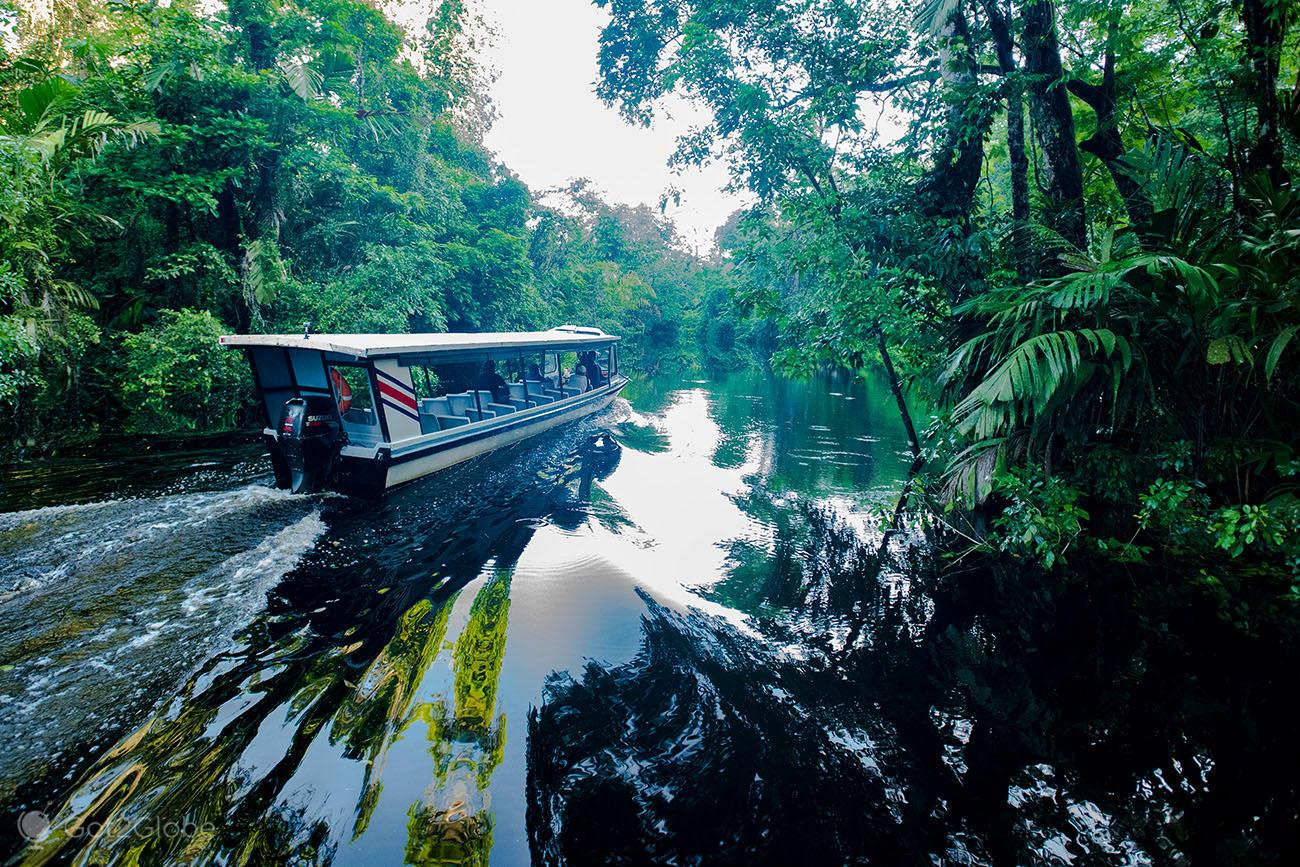
The village of Tortuguero has no through road, no bus terminal and no car park at its edge. Streets exist, but they are footpaths. Everything that arrives — building materials, groceries, school supplies, visitors — comes by water or by air, which makes this one of the few settlements in Costa Rica where knowing how to get to tortuguero costa rica is a genuine logistics question rather than a matter of picking a highway exit. The geography explains the rest. Tortuguero National Park protects a lattice of freshwater canals, lagoons and rainforest running parallel to the Caribbean coastline in the canton of Pococí, Limón province. Those canals are the road network. Public and private boats run them daily from a handful of river docks on the mainland, and a short airstrip north of the village handles small aircraft from the Central Valley. Both approaches converge on the same place: a stretch of black-sand beach where green turtles nest, backed by a village of roughly a thousand people and a park office that answers the phone at +506 2709-8086. Anyone comparing a Tortuguero boat transfer against a flight is really comparing time on the water against time in the air — and the water is where the wildlife is. Howler monkeys, caimans, basilisk lizards and herons appear along the banks well before the park boundary. That is the practical consequence worth planning around. The journey is not dead time between a hotel and a destination; it functions as the first wildlife-spotting stretch of the visit, which is why the park recommends an arrival between 06:00 and 12:00, before the heat flattens animal activity in the canals. Departure times from the mainland docks are set to protect that window, and they are earlier than most travellers expect. Anyone researching how to get to tortuguero costa rica should therefore start from the return leg and work backwards, since the last boat out governs how long the day can run. Conservation fees are collected in advance online, not at the dock, and the official park authority publishes current details at https://www.sinac.go.cr. The sections below break down the routes, the timing, the fee and the packing list separately — this page frames the decision, and each dedicated section carries the numbers.
“The canals are not the route to the park. They are the park.”
Tortuguero, Pococí, Limón, Costa Rica is a remote destination accessible only by boat or plane. Most visitors travel via a combination of road and boat transit, though regional flight options are available.
Route 32 from San José to Cariari, then local road to La Pavona dock
Public or private boat transit from La Pavona dock to Tortuguero village
Private ground transport from San José to La Pavona dock
Domestic regional flight from San José (SJO) to Tortuguero Airstrip (TTQ)
Arriving via boat from La Pavona is the standard route for most travelers. Ensure you arrive at the dock during the recommended window to secure passage on the water taxi service.
The best time to visit Tortuguero National Park is during the early arrival window of 06:00–12:00. Arriving within this timeframe helps avoid peak midday heat and provides the highest probability of observing wildlife activity within the park canals.
Humid with temperatures 24°C–30°C. Peak months for green sea turtle nesting.
Drier with temperatures 23°C–31°C. Favorable weather for canal exploration.
—
Mid-week mornings offer the quietest experience for visitors navigating the canals.
—
This window maximizes wildlife sightings and avoids the most intense tropical heat.
Verdict: The optimal time to visit is mid-week during the morning arrival window of 06:00–12:00, particularly between July and October for sea turtle activity.
Tortuguero National Park maintains consistent daily operating hours throughout the week to accommodate visitors. The park is open every day during the scheduled morning and afternoon sessions.
Tortuguero sits behind a boat-or-plane-only approach, so a few things need settling well before you reach the dock.
Everything you need to know about how to get to tortuguero costa rica
The park is accessible only by boat or plane, making water transport the most common method. Visitors typically travel to a river port such as La Pavona before completing the journey by boat through the canals.
No, there are no road connections directly to the village. Visitors must leave their vehicles at a secure parking area in La Pavona and complete the transit via boat.
The park requires advance online booking for the conservation fee to manage visitor capacity and support ecological preservation. This system ensures that all guests contribute to the maintenance of the protected canals and nesting beaches.
The best arrival window is 06:00–12:00. This early schedule helps visitors avoid the midday heat and maximizes opportunities to spot local biodiversity along the water routes.
The park operates daily from 06:00–12:00 and 13:00–16:00. These hours apply consistently throughout the week to manage access to the trails and waterways.
Travelers should note that the location is remote and navigation relies on waterway transit. Planning your arrival within the designated operating hours is essential for a smooth experience.
Most visitors utilize organized transport services to simplify the logistics of how to get to Tortuguero Costa Rica. Booking a guided transit ensures you have a boat waiting to navigate the canals upon your arrival at the port.